A large share of heat can be lost through poorly insulated exterior walls. We first check whether the cavity is suitable, then choose the material and method that best fit your home.
A large share of heat in a home can be lost through poorly insulated exterior walls. Especially in homes with an empty or insufficiently insulated cavity wall, the heating system has to work harder to keep a comfortable temperature. With a well-insulated cavity wall, heat stays inside longer, comfort improves, and energy bills go down.
At 123Isolatie we don’t only look at how much insulation material can be installed in the cavity. First we assess how the façade is built and whether the cavity is suitable for insulation. Based on that, we choose the material and method that best fit the home.
Our approach is simple: careful workmanship, efficient insulation, and high-quality materials at a fair price.
Why is cavity wall insulation important?
Heat always moves toward a colder environment. In cold periods it is warmer indoors than outdoors, so a home continuously loses heat through the roof, walls, windows and floor.
In homes with exterior walls made of an inner leaf and an outer leaf, there is often a space between them: the cavity. When this cavity is empty or poorly insulated, heat can escape relatively easily through the façade.
By filling the cavity with suitable insulation material, that heat flow is strongly slowed down. As a result, the heating system uses less energy to keep the home at temperature.
A well-insulated cavity wall can contribute to:
A lower energy bill
More comfort at home
Fewer cold walls
Less cold downdraught
A more stable indoor temperature
Less heat loss in winter
Better protection against heat in summer
A more sustainable home
How much can you save with cavity wall insulation?
Exact savings differ for every home. Results depend on façade size, cavity width, existing insulation, energy use and how the home is heated.
In a home with an empty or poorly insulated cavity wall, the improvement can be substantial. By reducing heat loss through the façade, the heating system runs less often and for shorter periods.
Possible savings are influenced by:
The type of home
The number of square metres of façade
The width of the cavity
The current insulation value
The chosen insulation method
The insulation material
How the home is heated
Indoor temperature
Energy prices
The quality of installation
How does cavity wall insulation work?
A cavity wall usually consists of two separate walls with a space between them. From inside to outside, a façade may include, for example:
Interior finish
Inner leaf of the wall
An air cavity
Any existing insulation
Outer leaf of the façade
Pointing and façade finish
Heat conduction
Materials can pass heat from one point to another. Some building materials conduct heat relatively easily. Insulation materials are designed to limit conduction as much as possible. Filling the cavity slows heat flow through the façade.
Air movement
In an empty cavity, air can move freely. Filling the space with suitable insulation limits unwanted air movement. Many insulation materials contain small cells, fibres or beads that largely trap air.
Heat radiation
Heat can also be transferred by radiation. The overall insulating performance of a façade depends on the full build-up and the properties of the materials used.
What does the insulation value mean?
Insulation performance depends on thermal conductivity and material thickness, among other factors. A material with strong insulating properties can help limit heat flow through the façade — but final performance is not determined by the material alone.
These factors also play an important role:
Cavity width
Insulation thickness
Thermal conductivity of the material
Quality of the existing façade
Presence of thermal bridges
How the material is installed
Complete and even filling of the cavity
Condition of the pointing and façade
Is every cavity wall suitable for insulation?
Not every cavity wall can be insulated without inspection. Before we insulate, we assess the existing situation — including how the façade is built and whether the cavity is suitable.
A cavity wall can differ in:
Width
Construction
Age
Condition of the masonry
Presence of existing insulation
Contamination in the cavity
Moisture load
Façade finish
Type of bricks and pointing
Why is moisture an important concern?
A façade is constantly exposed to weather such as rain, wind and temperature changes. If the exterior wall is insufficiently protected or damaged, moisture can enter the structure.
If moisture issues are not resolved before insulation is installed, problems can remain or in some cases increase.
Damp patches
Mould growth
Problems with the interior finish
Damaged pointing
Deterioration of the façade
Reduced insulation performance
How is a cavity wall insulated?
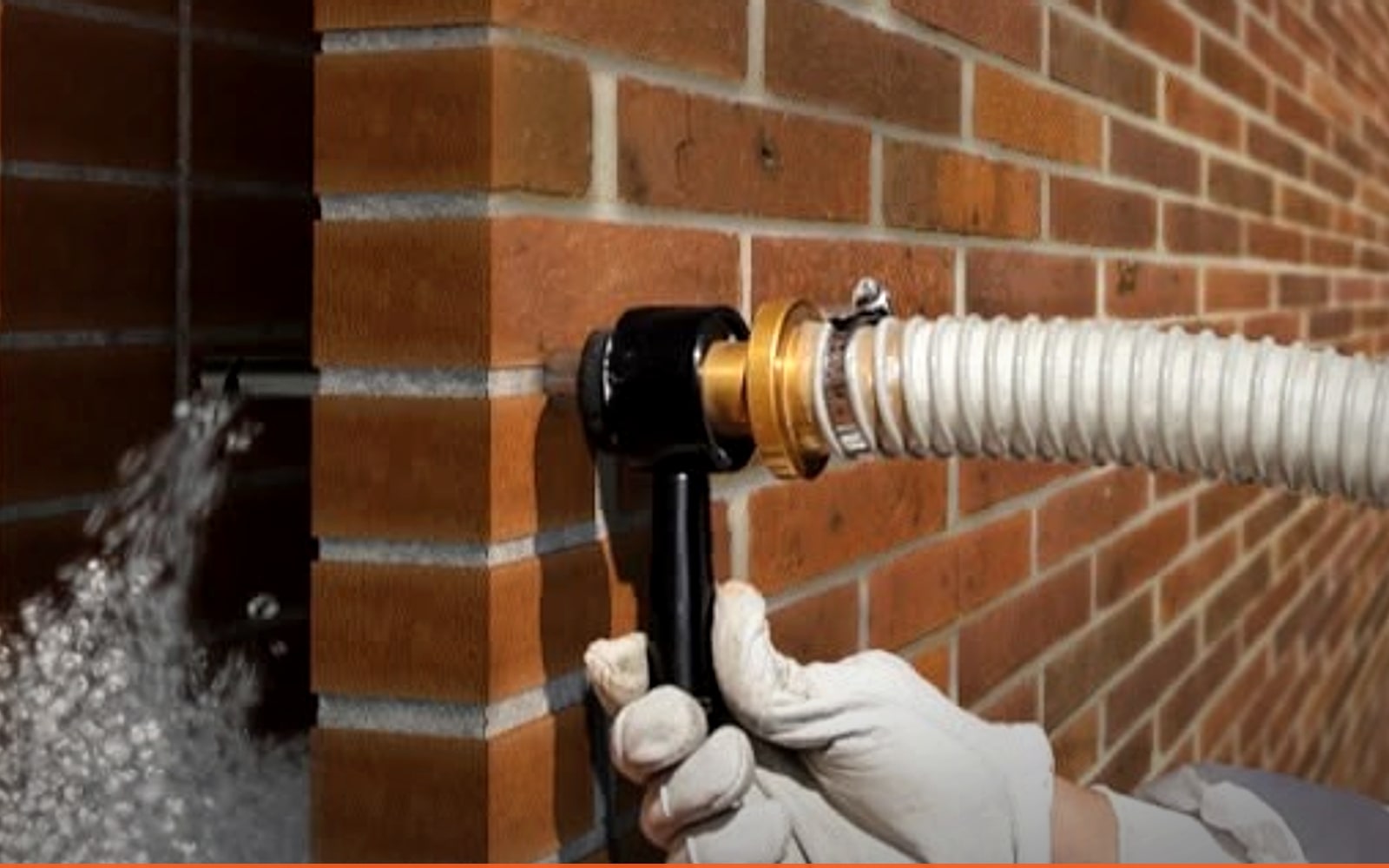
Cavity wall insulation is usually installed from the outside. Small openings are made at various points in the façade, and insulation material is injected into the cavity through those openings.
The goal is to fill the cavity as completely and evenly as possible without unnecessary damage to the façade. In broad terms, the process includes:
Inspection of the façade and cavity
Suitability check
Selecting the right insulation material
Preparing the façade
Installing the insulation material
Careful filling checks
Restoring the drill holes
Handover of the completed work
Cavity wall insulation and thermal bridges
A well-insulated cavity wall can strongly reduce heat loss through large parts of the façade. Still, homes often have places where heat escapes more easily. These are called thermal bridges.
Cavity wall insulation can significantly reduce heat loss through the façade, but it does not automatically solve every thermal bridge. That is why our advice looks at the home as a whole.
Concrete structures
Window frame connections
Lintels
Floor-to-façade connections
Balconies
Corners and structural elements
More comfort at home
One of the biggest benefits of cavity wall insulation is extra living comfort. A poorly insulated wall can feel cold. After insulating the cavity, the inner surface of the façade can become warmer and more stable.
Cavity wall insulation can help with:
Fewer cold walls
Less cold downdraught
A more even temperature
More comfort in winter
Less heat loss
A more pleasant indoor climate
Which insulation materials can we install?
At 123Isolatie we work with several insulation materials. The best choice depends on cavity width, the existing façade, the desired insulation value and the technical properties of the home.
HR++ EPS beads
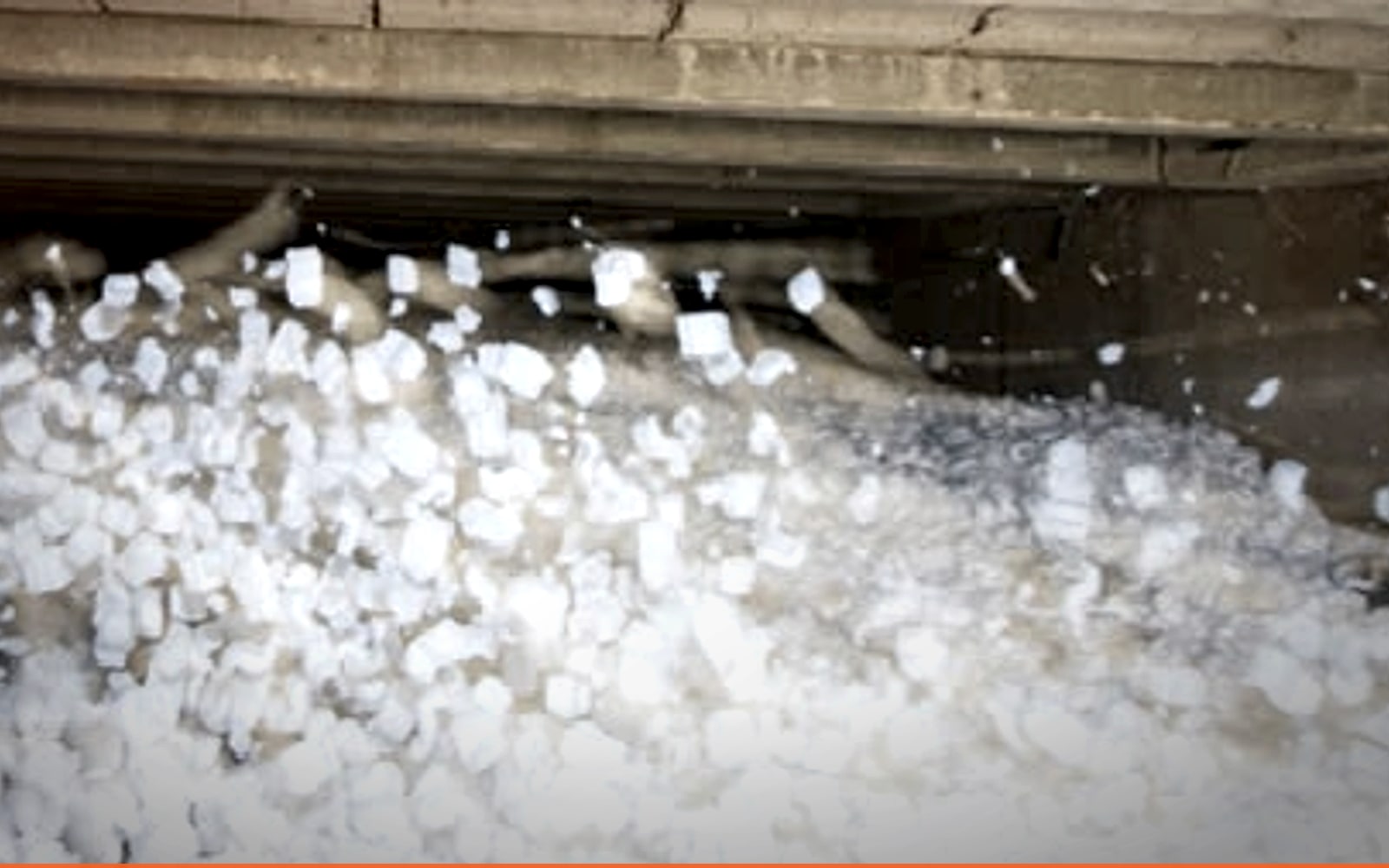
EPS beads are small insulation pearls that can be suitable for cavity wall insulation. The beads are injected into the cavity and together form an insulating layer.
Good thermal insulation
Lightweight material
Suitable for filling cavity walls
Works well in different cavity widths
Good moisture-resistant properties
Wide range of applications
Mineral wool for cavity walls
Mineral wool can also be used to insulate cavity walls. It can suit certain façades and offers sound absorption as well as thermal insulation.
Good thermal insulation
Good sound absorption
Suitable for various façade constructions
Works well in suitable cavities
Non-combustible material
UF foam or other suitable systems
Depending on the existing cavity and technical situation, other insulation systems may also be used. That is why we do not automatically choose one standard material.
Matched to cavity width
Suitable for specific access conditions
Adaptable when obstacles are present
Chosen based on desired insulation value
Accounts for moisture-technical properties
Which cavity wall insulation is best?
There is no single insulation material that is best for every cavity wall. The right choice depends on:
Cavity width
Type of home
Existing roof and façade construction
Presence of existing insulation
Condition of the façade
Desired insulation value
Moisture load
Available budget
Desired sound insulation
Our cavity wall insulation process
01
Façade inspection
We review how the façade is built and assess the overall condition of the exterior walls.
02
Cavity check
We check whether a cavity is present and review the available space and existing situation.
03
Moisture and façade condition check
We look at damage, pointing, cracks, moisture issues and other factors that may affect the insulation work.
04
Advice on the right method
Based on the home, we determine which insulation method and material are most suitable.
05
Careful installation
The insulation material is installed using the correct method, with attention to filling the cavity as completely and evenly as possible.
06
Repair and inspection
After installation, the drill holes are carefully finished and we check the result.
High quality at a fair price
At 123Isolatie we believe good insulation starts with good preparation. We don’t simply choose the cheapest material — we look for the best solution within the available budget.
Our approach is based on: the right inspection + the right material + a suitable insulation method + careful installation.
Whether you choose EPS beads, mineral wool or another suitable material, we focus on what technically and practically fits your home best.
123Isolatie: careful, efficient and focused on high-quality insulation at a fair price.